President of the Lombardy Region A. Fontana: “Cremona Musica is the expression of a city that has been able to transform its tradition into an international vocation.”
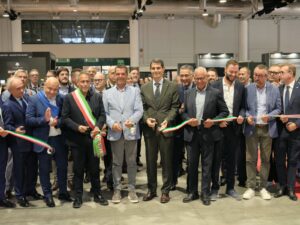
Ribbon-cutting for the three-day event that is an international reference point for manufacturers, artists and talents from around the world. Over 450 exhibitors from 35 countries, more than 1,000 artists on the programme.
PRESS KIT: https://drive.google.com/drive/folders/1rrmd6UDG5OBMIBw2FrHwrCc-xdKfgLwh?usp=drive_link
Cremona, 2 October 2026 – Thirty-five nations represented, buyers from every continent, and musicians from Japan, Germany and Brazil, to name just a few, gathered for the ribbon-cutting of the twenty-second edition of Cremona Musica Expo & Festival, which opened this morning at CremonaFiere with the same calling that has set this city apart for centuries: making music not a product, but a universal language.
“Cremona Musica is the music fair in the capital of music,” said Roberto Biloni, President of CremonaFiere, at the opening ceremony. This year, those words carry extra weight: “Despite the storm that struck us on 28 August, today we are able to open our international fair. I thank the companies, the institutions and all my staff. Without them, and without careful and highly professional work, we could not have opened today. I am convinced that the music fair is the best way to start again.”
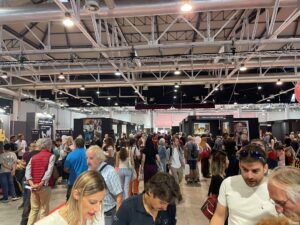
Four hundred and fifty exhibitors filled the halls, and within the first few hours the fine string-instrument making of Mondomusica was already in dialogue with Piano Experience, the Electric Sound Village and the four hundred musicians of the Wind Festival. Cremona is, once again, the world capital of music. “What we aim for in the future is to have more and more young people coming here because they are passionate about a particular instrument,” the President added, “and then discovering the art of violin making, connecting with traditional instruments too, trying out a violin and falling in love with it.”
Cremona thus confirms itself as the place where Cremonese violin making, recognised by UNESCO as Intangible Cultural Heritage of Humanity, continues to speak to the world, the place where a master luthier and a young Brazilian guitarist meet in the same aisle. It is this dimension of culture, craftsmanship and encounter that the Minister of Tourism, Gianmarco Mazzi, chose to highlight in his address, describing a “programme that shows a territory’s ability to bring together culture, artisan know-how, enterprise and international appeal,” and “turning an Italian excellence into value and opportunity.”
In the same vein, Alessandra Pastorelli, Embassy Counsellor and Head of Office II – Policy Direction and Oversight of ICE, offered the perspective of soft power: “Culture, and with it everything we know how to do, is our soft power, and it can be a driving force for promoting our productive capabilities worldwide. Cremona can be a model to take abroad.”
The President of the Lombardy Region, Attilio Fontana, recognised in a video message that this edition represents something beyond the continuity of a trade fair: “Cremona Musica is the expression of a city that has been able to transform its tradition into an international vocation. Starting again by turning difficulties into shared energy is the spirit with which I wish Cremona Musica the great success it deserves.”
MEP Massimiliano Salini noted that, with the closure of Frankfurt and the reshaping of Europe’s major cultural fairs, Cremona Musica now occupies a space that is not only commercial. “Music here becomes probably the most significant cultural event at European level,” he said, seeing the event as a political signal for the entire Union: “Europe is desperately searching for something that will make it a protagonist again. And here we find a recovery of cultural tradition that is not nostalgic, but strategic.”
Cremona Musica is also, and above all, a dialogue between generations and forms of knowledge, as the President of the Province, Roberto Mariani, pointed out: “Cremona Musica is a place where tradition meets innovation, where the knowledge of our master luthiers engages with new instruments, new technologies, new markets and new generations. Above all, it is a meeting place between those who build and those who play, between those who preserve ancient knowledge and those who interpret it in new forms.”
At the ribbon-cutting, the Mayor of Cremona, Andrea Virgilio, chose his words carefully on what it means to safeguard a heritage without letting it become frozen in time: “Here, the great legacy of violin making meets research and the transformations of the music industry. The deepest value of this event is to preserve ancient knowledge without turning it into a static memory, making it instead a lever for innovation, connection and the future.”
Gian Domenico Auricchio, President of the Chamber of Commerce of Cremona-Mantova-Pavia, highlighted the tools through which the chamber system supports the sector: the “A Place to Play” Masterclass, the Cremona Summer Festival, the Cremona Band Festival, and the Cremona Musica 2026 call for funding in support of businesses. “Musical culture, the violin-making supply chain and music tourism together contribute to Cremona’s appeal and to the promotion of the territory,” said Auricchio, outlining a path that brings together training, young performers and international exchange.
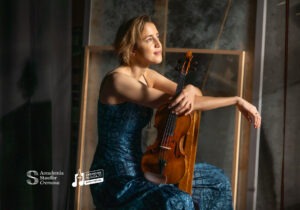
Beyond the exhibition halls, the city takes part through Cremona Musica Downtown, with concerts in its squares, theatres and historic courtyards. Tomorrow evening, Saturday 3 October, the Cremona Musica Gala Concert will present the Premio Abbiati del Disco and the Cremona Musica Awards to Giovanni Iannantuoni, Vilde Frang and Michael Guttman. Technology also plays its part with the Yamaha Disklavier, which connects Cremona in real time with Italian conservatories for remote concerts and masterclasses, proof that living music, the kind that passes through hands and walls, now has the tools to cross any distance.