by Annarita Garganese
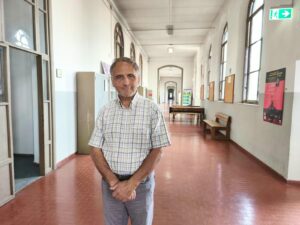
Born in Cremona in 1969 and deeply rooted in his city’s violin-making tradition, Sandro Asinari is vice president of the Antonio Stradivari Consortium of Violin and Bow Makers of Cremona. He will be present at the Cremona Musica Expo and Festival with a stand dedicated to his workshop.
What does it mean for a Cremonese luthier to participate in this fair today?
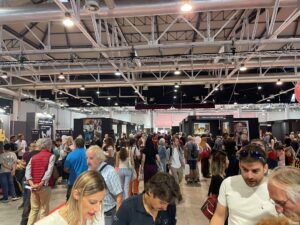
It’s a key event. Even though our workshop is in the city, attending the fair allows us to meet musicians, colleagues, professionals, and enthusiasts from all over the world in just a few days. It’s a very different experience from the daily work in the workshop, as it allows for direct, international exchange.
Over the years, I’ve had the opportunity to participate in other industry initiatives, but Cremona Musica has taken on a special role. It’s an event that has established itself as a benchmark for violin making and quality musical instruments. People come to Cremona to seek out handmade instruments, originality, and artisanal expertise. This makes the fair a valuable place not only to showcase one’s work, but also to engage with an attentive and knowledgeable audience.
His training began very early, at violin-making school. How can the Cremonese tradition be continued without turning it into a simple imitation of the past?
I enrolled in 1983, when I was thirteen. I don’t come from a family of musicians, but of artisans, and this predisposition for manual labor helped me from the start. After school, I continued with a workshop-school program, which was essential for understanding the difference between learning the basics and actually starting your own business.
The Cremonese tradition is naturally an essential reference. I draw inspiration from the great models of the past, such as Stradivari and Guarneri, but I have never made copies of the past. My instruments are unique, and this choice allows me to express my own identity. Every violin maker must engage with history, but also find their own voice: in the varnish, in the construction details, in the finish, in the research into sound.
How important is listening to the raw materials when building an instrument?
Very much so. When I begin a project, I dedicate myself completely to it. I don’t work on multiple instruments at once, because each piece of wood has its own characteristics and must be understood. Violin making can’t be a serial process: the material must be interpreted.
When working with the gouge and other tools, you can hear the wood’s response. The spruce used for the soundboard can come from different areas: that from the province of Bolzano, for example, may be softer; that from the Canale Valley or Friuli may be more compact, having grown in different climatic conditions. Many choices depend on these characteristics: the thickness, the instrument’s response, the volume, and the overall balance of the sound.
Because an instrument is born in a workshop, in a specific place, but its destiny is to meet the musician who will know how to make it sing