by Eleonora Fullone
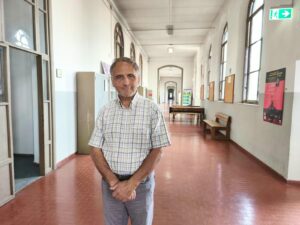
In Cremona, music history is not something you only find in books. A Conservatory student might walk into the Museo del Violino, pick up an instrument from the collection and play it in front of an audience. It is an experience deeply tied to the city of Stradivari, and it shows how training, tradition and musical practice can come together here. This identity is part of what keeps the “Claudio Monteverdi” Conservatory alive and thriving. Ahead of Cremona Musica Expo & Festival 2026, we met its director, Giuseppe Caffi, to find out how this identity shapes the training of young musicians and the institution’s plans for growth.
Director Caffi, how did the Conservatory come about, and how has it developed over the years?
The institution has its roots in the former Civic Music School “Claudio Monteverdi”, which for many years was an officially recognised music institute, until it became a state institution in 2022-23. Our history is closely linked to strings and early music, in keeping with the city’s tradition and Monteverdi’s legacy. Today we offer 14 disciplines and have around 110 students enrolled in AFAM courses (Italy’s higher education system for art, music and dance), with the added value of a teaching staff made up of musicians with very active concert careers. On top of that, about ninety students attend our open courses: they are available to all ages, with no entrance exam, and they are a way in particular to introduce children to music education from an early age.
Another area you invest heavily in is concert production. What role does it play in students’ training?
For us it is essential to involve students in productions from the very start, so they get used to performing for an audience and to the professional world that awaits them. We put on around 35 to 40 concerts a year and we have a small string orchestra, often joined by wind players. Cremona also gives us many opportunities: we work with a number of local institutions, including the Teatro Ponchielli and the Museo del Violino, and we take part in the Monteverdi Festival.
Perhaps the experience at the Museo del Violino captures better than anything else what it means to study music in Cremona.
It is a unique opportunity, deeply connected to our city. Thanks to an agreement with the Museum, some students are able to play highly prized instruments from the collection and perform for an audience that is particularly attentive to the quality of the sound and the performance. The partnership is also growing stronger: we have launched a doctoral programme, and one of our students is working on a project devoted to the violin and the performance aspects of these instruments.
Can the relationship with the local area also become a bridge to a professional career?
Absolutely. We try to help students enter professional circuits: some of our singers have auditioned for the AsLiCo choirs, our string players can find opportunities in professional orchestras, even in prestigious settings such as the Arena di Verona season, and our organ students play at services and at inaugural concerts for restored organs. The Conservatory tries to act as a go-between, finding opportunities where young musicians can gain experience, visibility and professional practice.
Which brings us to Cremona Musica 2026. What will you be bringing to the fair?
We want to present the Conservatory through some recordings of our activities, but above all we want to bring our students to perform. We are looking at the spaces where they will be able to play, and there is a plan to involve the orchestra as well. We want to show in a concrete way that the Conservatory is present in the area, and to put the students centre stage.
Today, preparing a musician for a career means going beyond instrumental training alone. What skills are needed?
Technique is still fundamental, but musicians also need a broader cultural education, language skills and the ability to manage themselves. A musician has to know how to present themselves and where to look for opportunities: a degree of management training and a form of personal entrepreneurship are now essential. There are also many alternatives to a solo career, from orchestral playing to teaching and chamber music. The Conservatory’s job is to help each student find their own path.
And what path do you see for the Cremona Conservatory in the coming years?
I hope it can continue to grow, expanding its classes and eventually including brass as well. Above all, I would like to create a permanent Conservatory orchestra, partly run by the students themselves, which could also work with the Teatro Ponchielli. A move to new premises is also planned, tentatively for summer 2028, which should give us more space and new opportunities to grow.
What still needs to change in Italy’s AFAM system?
I think we need to find a better balance between the different subjects. General education is important, but complementary subjects must not take too much time away from students’ core training. The system is still settling down: I hope it can consolidate and become more stable, while keeping its aim of giving musicians the tools they need to face their professional future.