by Annarita Garganese
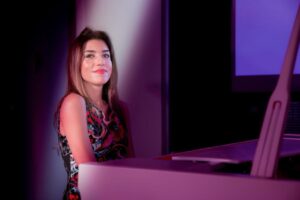
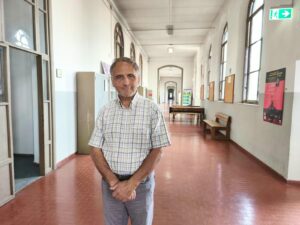
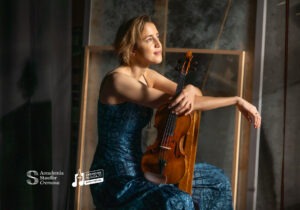
What if silence were trying to tell us something? This question gave rise to Le Temps Suspendu. Il Concerto del Silenzio (The Concert of Silence) by Rimini-born pianist Francesca Cesaretti, born in 1981: a perceptual experience, a journey of listening and contemplation in search of beauty, harmony and inner calm.
Francesca, where does the project come from and what is it about?
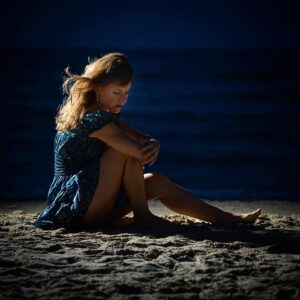
The starting point is Le Temps suspendu, a concept album released in 2025 by EMA Vinci, which Guido Barbieri described on Rai Radio3 Suite as a musical anthology centred on the idea of time. It came about during the pandemic, at what was for me a time of stripping things back and of minimalism, and the album is the result of a personal exploration of French music from the late nineteenth and early twentieth centuries. Starting from Debussy and Satie, it extends to less frequently performed composers such as Jehan Alain, Florent Schmitt and Cécile Chaminade, who share the same pull towards dreams, night and waiting. My suspended time is the moment when our thoughts settle and we truly connect with ourselves: it can come at the most varied moments, in the silence of a cathedral or during a walk on the beach.
How is the musical journey structured?
The sequence of pieces traces a path of spiritual growth, which is also autobiographical. It begins with Debussy’s Rêverie, a daydream from which everything originates. Satie’s Gymnopédie leads towards bare, essential music, while Debussy’s Nocturne and Alain’s Ballade des pendus pass through the night, through desires and fears. With Schmitt’s L’Heure immobile we arrive at a contemplation made of tiny transformations within an apparent stillness. Then come silence, Satie’s Gnossienne, Debussy’s Clair de lune and finally Chaminade’s Méditation. I wanted to close with the example of a great woman who, despite the difficulties of her time, managed to fulfil her calling as a composer.
How does this idea translate into the form of the concert?
Music and silence are not seen as opposites: silence gives shape to sound and prolongs its resonance. Some pauses become an integral part of the dramaturgy, as an explicit reference to John Cage’s 4’33”. The audience is invited to stay within the flow of listening and to applaud only when they truly feel the need to. My words, two Symbolist poems by Rimbaud and Verlaine, the slow shifting of colours across the keyboard and a gift for those attending together create a synaesthetic dimension. These are not spectacular effects, though: the concert has to remain bare and minimal. The aim is to find a new format for classical music without altering its nature.
What message would you like to leave with the audience?
Don’t be afraid to follow your dreams all the way, even when that leads you to discover parts of yourself you would rather not see. It is an invitation that runs against today’s frenzy: to rediscover moments of slowness, waiting and even absence, because sitting at the piano and not playing is a moment of very strong connection with the audience and with oneself.
Behind the project there is also a personal journey: an interest in philosophy, long work on awareness, and the experience gained since 2017 in concerts held at the Hospice of the Ospedale Infermi in Rimini with Donatori di Musica and AIL Rimini. There I explored the idea of music that can put us in touch with our deepest emotions, easing fears and tensions.