di Virginia Rossetti
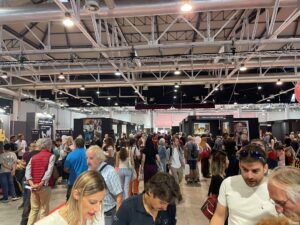
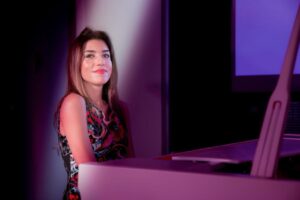
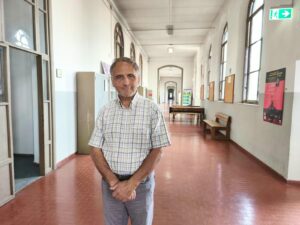
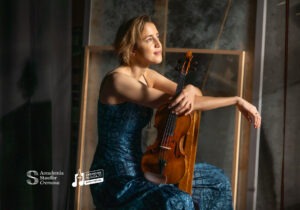
Cremonese by birth and spirit, violin maker Elisabetta Giordano, born in 1971, tells us about her art, a blend of manual precision, attentiveness to the material, and a profound responsibility toward the future of her city’s great school. We spoke with her in anticipation of her return to Cremona Musica, which this year will take place from October 2nd to 4th.
The origin of your work is woodcutting. What is the greatest challenge in transforming raw material into an instrument capable of thrilling a soloist on stage?
The greatest challenge lies in absolute respect for the material: you have to follow the wood without forcing it. This is why I practice the “split wood” technique for the soundboard and the soundboard; only in this way can you be sure to follow the natural grain. If the grain is straight and uninterrupted, the transmission of sound will be unobstructed. The sonic identity is born there, from the encounter between the luthier’s vision and the potential written in the wood’s knots.
In an increasingly technological and frenetic world, a fair like Cremona Musica still celebrates the value of the craftsman. Are you aware of leaving a mark on the history of the Cremonese school?
In a fast-paced world, Cremonese violin making demands respect for the wood’s rhythms: relaxed seasoning, manual skills, and extremely limited production, sometimes just one or two instruments a year. This choice helps prevent the work from becoming mechanical. Each instrument must have its own soul. Building today while thinking about who will play in fifty years is a great responsibility that leaves me feeling uneasy! For me, it’s about making musicians happy!
The fair is a meeting place for people from all over the world. How do you feel about parting with an instrument you’ve devoted your heart and soul to when it’s purchased by someone who lives far away?
It’s a delicate moment. I prefer my instruments to remain in Italy or Europe so I can continue to care for and care for them over time. Meetings at the fair are invaluable for building the trust needed to continue to work on their tuning. Seeing a musician give voice to one of my works on stage is what transforms that detachment into pure satisfaction.